“Twinkle, twinkle, twinkle, lightning bugs.
Hello, Hello.
I am glad to see you, lightning bugs.
You glow, you glow!”
– from Larry the Lightning Bug by Bill Walker (1953 recording from Miss Frances of Ding Dong School)
Heather has loved fireflies, also known as lightning bugs, since childhood when her dad told her stories about a lightning bug named Larry who sang a little song.

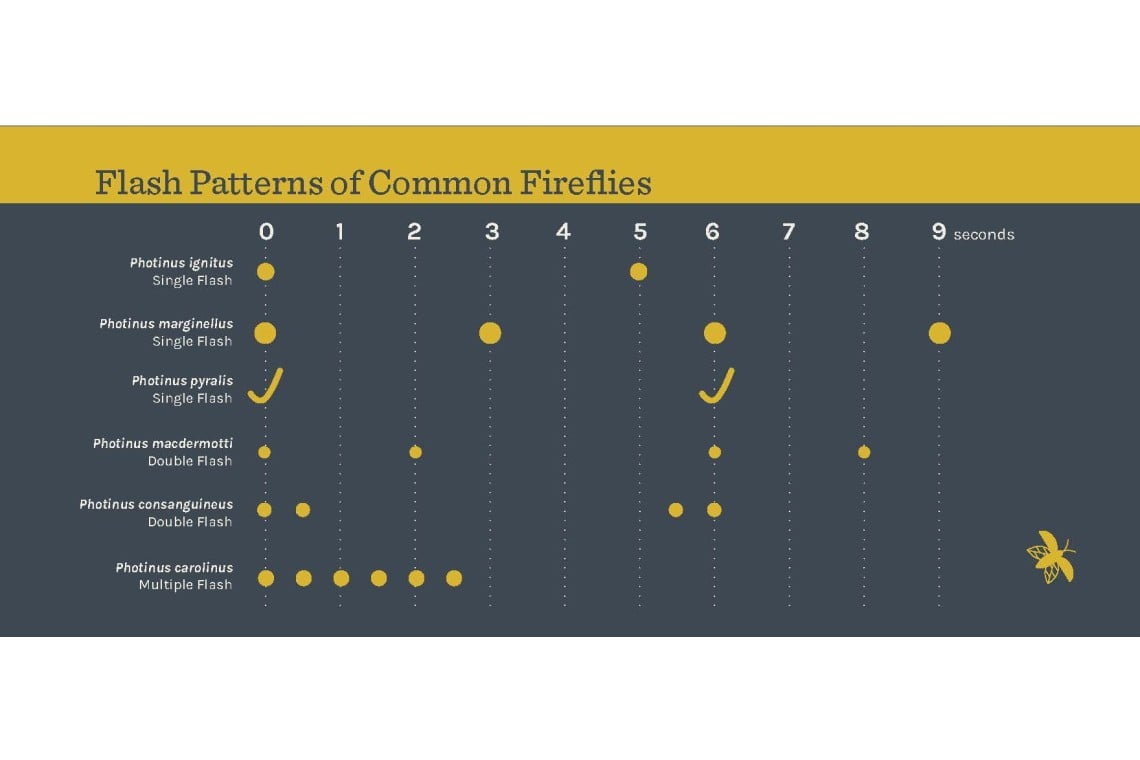
Fireflies are neither flies nor true bugs. Rather, they are beetles, but their name is accurate in describing their ability to produce light. While not all of the around 2,000 firefly species worldwide flash, all firefly larvae (aka glowworms) display bioluminescence. Fireflies likely evolved the ability to light up as a way to ward off predators, but now they mostly use their “lightning” to find mates. Each firefly species has a unique light pattern. Generally the males fly and display their specific flashes, while females on the ground respond with the matching pattern. Although some female fireflies, “femmes fatales,” prey on male fireflies of a different genus by copying their light signals.

How do fireflies make light? They have a special organ in their abdomens that combines the chemical luciferin, luciferases enzymes, and oxygen to produce light. This “lantern” organ contains lots of air tubes and reflector cells, and the firefly can regulate the amount of air coming in through the air tubes. Fireflies are extremely efficient—somewhere between 90-96% of their chemical energy is converted to visible light.
Warm June evenings bring the bright and brief firefly season. The next few weeks is the time for adult firefly observations. Just before dark, can you see them emerging from their daytime hideouts? Can you notice different flash patterns? How about creating your own flashlight firefly language?